Online Keno in New Zealand: Rules and Play
 Available in US
A practical guide to game terms, draw formats, card play, payouts and staking on New Zealand casino sites.

Table of Contents
- What to Check Before Choosing an Online Keno Casino
- How New Zealand Online Keno Draws Work
- Free Keno, Multi-Card Play, and Real-Money Games
- Choosing Numbers and Playing Multiple Keno Cards
- How to Play an Online Keno Draw
- Keno Stakes, Minimum Bets, and How Winnings Are Calculated
- Keno Odds, House Edge, and RTP
- Real-Money Keno Prizes and Tax in New Zealand
- Instant-Play Keno on Phones and Other Devices
- How to Bet on Keno Without Overcommitting
What to Check Before Choosing an Online Keno Casino
A casino’s keno offer is more than the presence of a game tile in its lobby. Before you open an account or make a deposit, check whether the game is clearly described, whether its rules and paytable are accessible, and whether the site explains the terms that apply to your account. These details let you assess the offer itself rather than relying on a prominent banner or a general claim about the casino.
Check what the casino actually offers
Start with the keno section of the game lobby. Confirm that the game you are considering is available to you and that its information can be opened before you commit money. A useful listing should lead to rules, spot choices, stake limits and a paytable. If those details are difficult to find, or the game’s rules appear only after you have entered it, you have less information with which to make a considered choice.
Look for the boundaries of the offer as well as its headline features. A game’s title alone does not tell you which rules apply, whether it has its own limits, or whether it is included in a promotion. Read the game information itself and compare it with the casino’s general terms. If the wording conflicts or leaves an important condition unclear, ask customer support to explain it before depositing. Keep the answer and the relevant terms so you can refer back to them.
Choosing an online keno site in New Zealand calls for checking what each operator can reliably tell you about its credentials or payouts. Use these details as a starting point when deciding where to play.
License: Malta Gaming Authority, licence no. MGA/B2C/370/2017 Play Grand lists a Malta Gaming Authority licence, number MGA/B2C/370/2017. You can use this licence detail as one point of reference when assessing the operator.
Payout speed: 1-3 business days Lamabet states that payouts take 1–3 business days. This gives you a specific timeframe to consider when reviewing its payment arrangements.
License: Malta Gaming Authority, licence no. MGA/B2C/394/2017 N1 Casino lists a Malta Gaming Authority licence, number MGA/B2C/394/2017. You can take this stated licensing information into account when assessing the operator.
Payout speed: 1-3 business days Wintino states a payout speed of 1–3 business days. This provides you with a stated timeframe to consider for withdrawals.
License: Curaçao Gaming Authority, licence no. OGL/2024/165/0185 BitStarz lists a Curaçao Gaming Authority licence, number OGL/2024/165/0185. This licensing detail gives you a specific credential to check when evaluating the operator.
License: Tobique Gaming Commission, licence no. 0000064 Neospin lists a Tobique Gaming Commission licence, number 0000064. You can use this stated licence information as a reference when considering the operator.
License: 07017519840 · Payout speed: 1-3 business days Zotabet lists the identifier 07017519840 and states a payout speed of 1–3 business days. These are the available details for you to consider when assessing the operator.
License: Tobique Gaming Commission, licence no. 0000091 7Bit Casino lists a Tobique Gaming Commission licence, number 0000091. You can refer to this stated licensing detail when assessing the operator.
License: Tobique Gaming Commission, licence no. 0000002 Ricky Casino lists a Tobique Gaming Commission licence, number 0000002. This gives you a specific licensing detail to consider when evaluating the operator.
The lobby can also help you distinguish a casino with a clearly presented keno product from one where the game is hard to assess. This is not a question of how many tiles are displayed. It is whether you can identify the game’s conditions and find the information needed to understand the offer. A large catalogue does not replace readable rules.
Read the bonus conditions separately
A cash bonus may be usable for keno, but do not assume that it is. A specialist casino review has reported that a cash bonus can sometimes apply to online keno; treat that as a possibility to confirm against the particular offer, not as a general rule. The operator’s current terms determine what qualifies.
Read the wagering requirement, the list of eligible games and the rules for bonus clearance. These are separate checks. A promotion may mention casino games broadly while excluding particular games, or keno may be available but contribute differently to clearing the bonus. If the terms do not say clearly whether keno play counts, ask before opting in. Do not infer eligibility from the fact that the casino offers keno or that the promotion is described as a casino bonus.

Also check whether the offer has additional conditions that affect your ability to use or withdraw funds. Pay attention to the order in which cash and bonus funds are used, any maximum stake attached to the promotion, and what happens if you cancel it. Make sure you understand whether an action can end the bonus or change the amount that remains subject to its rules. Read bonus, banking and withdrawal terms on the operator’s current site; saved promotional material may not reflect the conditions that apply now.
Consider who is responsible for the service
For an offshore casino, the relevant gambling regulator is in the operator’s home jurisdiction. That is different from having a New Zealand regulator supervise the service. Check which company operates the site and what jurisdiction its terms identify. Do not treat a logo or a general statement about security as proof of a particular regulatory status.
The Online Casino Gambling Act 2026 came into force on 1 May 2026 and established a transitional period for the New Zealand market. Providers already serving New Zealand customers before that date may continue under the transition until 1 December 2026. The full domestic licensing system is not expected to be operational until 2027. This changing framework makes it especially important to read the operator’s current terms and understand which entity is offering the service. A foreign regulator’s oversight does not create domestic government recourse for a customer.
Regulatory Status
A foreign regulator’s oversight does not create domestic government recourse for a customer in New Zealand.
Check the operator’s rules for account verification, complaints and withdrawals before you deposit. Confirm that the terms identify a clear process and that you can locate the relevant contact route. A casino’s marketing page is not a substitute for its contractual terms. If a support response does not answer a specific question about keno eligibility, bonus clearance or account conditions, do not treat the uncertainty as approval.
Make the comparison on verifiable details
When you compare online keno casinos, use the same questions for each: Can you access the game rules and paytable? Are its limits stated? Do the bonus terms explicitly cover keno? Can you identify the operating company and the jurisdiction responsible for regulating it? Can you find the complaint and withdrawal procedures?
This approach avoids choosing on the strength of a welcome offer or an appealing lobby alone. A suitable casino is one whose keno and bonus conditions you can understand before spending money. If an important term is missing, inconsistent or difficult to confirm, pause and seek clarification rather than assuming the most favourable interpretation.
How New Zealand Online Keno Draws Work
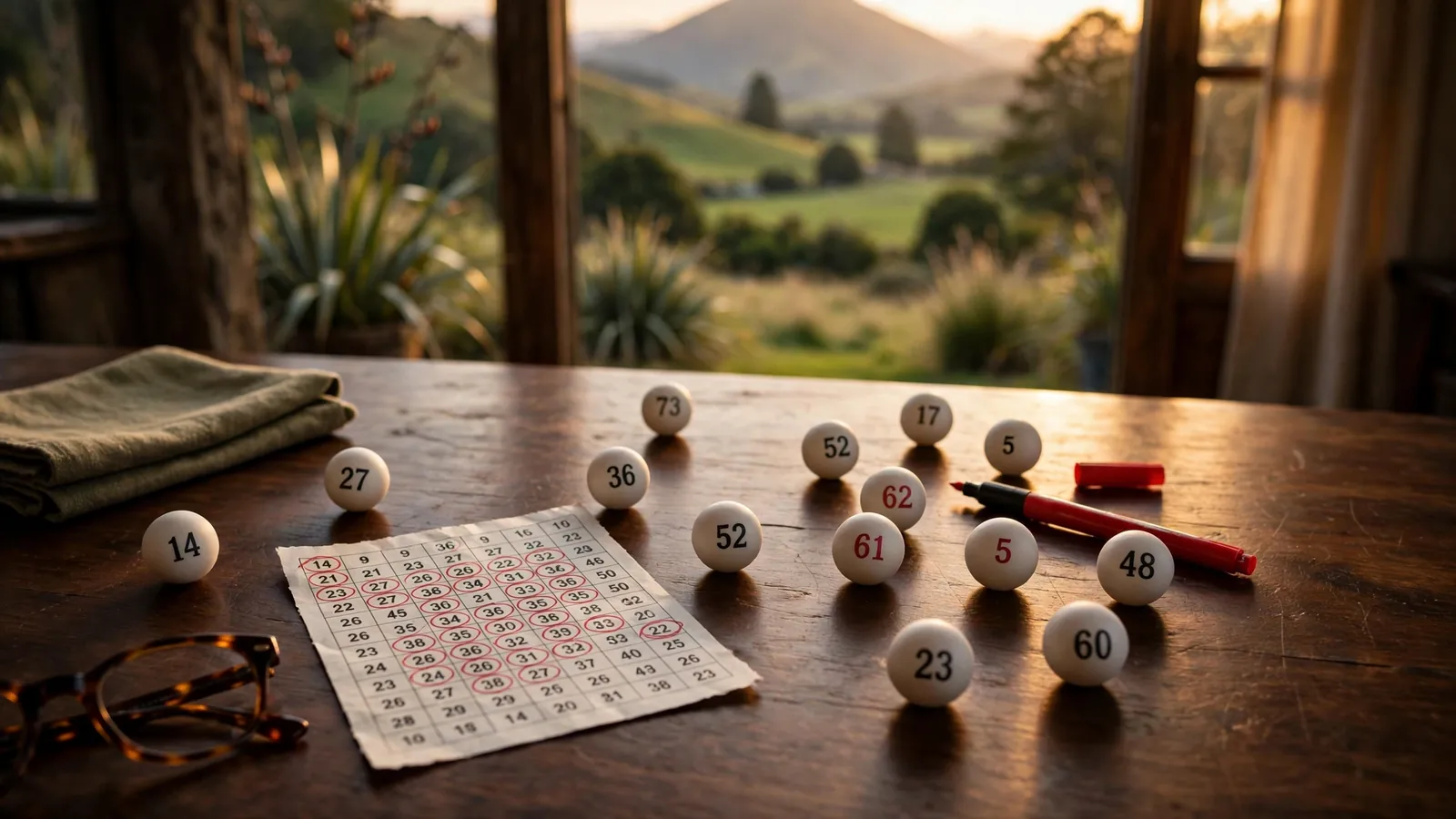
An online keno draw is a separate event in which the game produces a set of winning spots. In New Zealand, the draw selects 20 spots from a pool numbered from 1 to 80. The game uses a Random Number Generator (RNG) to determine which spots appear. The RNG is the mechanism behind the result; the displayed draw is the set of selected spots that you can compare with your card.

The distinction between the pool and the result matters. The pool contains all possible spots for that game, while the draw contains only the spots selected for that event. A spot can be part of the pool without appearing in a particular result. The draw is not a report of which spots have been popular or absent in earlier games: it is a new result generated by the game’s RNG.
A new result for each draw
Keno draws are random and independent events. Independence means that one draw does not set the result of the next. A spot appearing often in previous results does not become more likely to appear in the next draw, and a spot that has not appeared recently is not due to return. Frequency records describe past results; they do not provide information that changes the RNG’s next outcome.
This is useful when reading statistics or reviewing a game history. A record can tell you what has already been drawn, but it cannot establish a pattern that predicts the next result. The same applies to a run of results that looks unusual: it does not cause the system to compensate in a later draw. Each event has to be understood on its own terms.
The RNG also means that the draw is not determined by a visible sequence you can follow from one event to another. You see the result once it is produced, but previous outcomes do not let you work backwards to a reliable forecast. A familiar spot, a recent absence, or a cluster in the history does not change the next draw’s independence.
Keno draws are independent events; a spot appearing often in previous results does not make it more likely to appear in the next draw.
The daily schedule
New Zealand online keno draws take place four times a day, at 10AM, 1PM, 3PM, and 6PM. These set times give the game a repeating daily rhythm. The schedule tells you when draw events are planned; it does not make the result predictable or cause one draw to affect another.
Because the events are distinct, the scheduled time is not a signal about which spots will be selected. A result at 1PM does not carry forward into the 3PM draw, and the sequence of times does not imply that the same spots will recur or that different ones must appear. The RNG determines each event’s winning spots independently.
The schedule is also different from the draw mechanism. Timing identifies when an event occurs; the RNG determines its result. Keeping those functions separate avoids a common misunderstanding: a regular timetable can make the game feel like a continuous sequence, but each draw remains a fresh random event.
What the result can tell you
Once a draw is complete, its result shows which 20 spots were selected from the pool. It provides a definite record of that event, not a forecast for a future one. Reviewing the result can help you understand what happened in that draw, but it cannot reveal a dependable method for anticipating the next set.
That is the basic structure behind online keno in New Zealand in 2026: a pool of 80 spots, a 20-spot result determined by an RNG, and scheduled draws at set times each day. The schedule provides predictable event times; the winning spots remain random and independent from draw to draw.


Free Keno, Multi-Card Play, and Real-Money Games
Free and real-money keno can look similar on screen, but they differ in what is at stake. A demo game uses fake money, so playing it cannot produce a real-money win. It can still let you experience the game’s interface and see how you respond to following a game without risking cash. Treat it as a way to become familiar with the format, not as evidence that you have earned money or secured a future result.
In a demo, the displayed balance represents play money rather than funds you can withdraw. Any apparent success belongs to that practice session. Switching later to real-money play changes the consequence of each wager: your own funds are involved, and a result may affect your balance. The visual presentation may not make that distinction obvious, so check whether the game is marked as demo or real-money before starting.
Searching for free keno games can also bring up offers described as bonuses. A demo and a bonus are not the same thing. Demo play uses fake money and cannot pay real winnings; a bonus is an offer whose use depends on its own conditions. Do not assume that a free-to-play screen is a cash bonus, or that a bonus-funded session is the same as unrestricted demo play. If you move from practice to an offer or to cash play, read the relevant terms before proceeding.
- Use demo games to learn the interface
- Check if a game is marked as demo or real-money
- Read bonus terms before opting in
- Assume a demo win is a real-money win
- Treat a free-to-play screen as a cash bonus
- Infer bonus eligibility from the presence of keno
What changes with multiple cards
Online keno may let you play several cards at the same time. That changes the amount of activity you are following in a session: instead of considering one card, you can have selections distributed across multiple cards. The cards remain distinct parts of your play, even when they are active together. This is a change in how much you are tracking, not a guarantee of a particular result.
A multi-card option may be available in a free game or a real-money game, but do not assume that every version offers it. Nor should you infer that a demo’s card options, presentation or controls will match those of a real-money game. Check what the selected game actually allows before building a session around a particular setup.
More cards can make it harder to keep track of what you have chosen and what is happening across the session. That matters even when no cash is involved: it can be less clear which card you are looking at or how your selections are arranged. In real-money play, the same extra activity also means more decisions to monitor. A neat-looking screen does not remove the need to understand each active card.
If a game offers a four-card view, for instance, the label describes the number of cards shown or played in that mode; it does not by itself explain the game’s rules, the cost of a session or the value of a possible result. Confirm those details in the game rather than relying on a mode name. A demo can help you learn how the interface presents multiple cards, but its fake-money status remains unchanged.


Moving from practice to cash play
Use a demo to learn the layout and pace of a game, then pause before switching to real money. Confirm that the game is no longer in practice mode, and check what each active card represents before committing funds. If you prefer to keep the session easy to follow, playing one card at a time avoids the added task of monitoring several cards together. If you choose multiple cards, keep the distinction between them clear.
The key difference is not the appearance of the screen but the consequence of play. Demo keno has no real-money winnings; real-money keno puts funds at risk. Multiple cards alter how much you are following at once, but they do not turn practice play into cash play or make an outcome certain. Choose the mode you intend to use, and make sure the screen and terms match that choice.
Choosing Numbers and Playing Multiple Keno Cards
A keno card is a place to record the spots you select for a game. The available pool runs from 1 to 80, and a player can choose no more than 20 spots from it. The number of spots permitted on one line depends on the game: some allow between one and ten, while others extend the choice to 15 or 20. Check the game’s rules before filling a card, because a selection that fits one version may not fit another.
The card setup is separate from the draw itself. Your selections define which spots on that card can be matched against the game’s result. A smaller selection leaves fewer chosen spots to compare; a larger selection puts more spots on the card. It does not change the pool from which the game’s winning spots are drawn.
Attention The maximum of 20 spots across the pool is not a promise that every game accepts 20 on a single line.
Set up one card clearly
Before confirming a card, check that each selected spot is visible and that you have not mistaken a highlighted spot for an unselected one. A grid that is difficult to read makes it harder to verify the card, especially when several selections are being handled together. Use the game’s displayed controls and rules rather than assuming that every keno interface uses the same layout.
Keep the selection within the permitted range for that game. The maximum of 20 spots across the pool is not a promise that every game accepts 20 on a single line. Some games set a smaller line limit. If the interface prevents another selection, the game may have reached its permitted number; consult its instructions rather than trying to infer the rule from the grid.
You can choose spots manually, where the game provides that option. Treat the displayed selection as a setup, not as a prediction: past results do not make a spot more likely to appear in a later random draw. A pattern on the card may make your choices easier to recognise, but it does not give those spots an advantage.
What changes with multiple cards
Online keno can allow several cards to be played at the same time. Each card gives you another place to make a selection, so you can keep different groups of spots separate instead of combining every choice on one card. For instance, you might use separate cards for distinct selections you want to track. The exact number of cards available and the way the interface displays them depend on the game.

Multiple cards do not turn one selection into a larger selection on a single card. Each card remains its own set of chosen spots, and the game’s line limits still apply to each relevant selection. Before continuing, look across all displayed cards and confirm that each contains the spots you intended. This is particularly useful when the cards look similar: a small change in one spot can be easy to overlook.
A four-card layout, where offered, is simply a way to manage several cards in one game. It does not mean that each card has a different draw. Nor does adding cards make any particular spot more likely to be drawn. It changes how many selections you are tracking, not the random process that determines the result.
For a free practice game, use the same care in checking the cards as you would with any other mode. The setup can help you learn how that game presents selections, but it does not establish that another version has identical card limits or controls. Read the rules for the specific game, verify every card on screen, and keep the grid, spot choices, stake amount and paytable readable before proceeding.
How to Play an Online Keno Draw
The basic sequence is to open a game, prepare a card, enter it into a draw, then compare your selected spots with the results. The labels and layout vary between games, but the parts you need to identify are the card, the draw entry and the displayed results.
Playing a Draw
Open the keno game, check the rules, and ensure you are in the correct mode (demo or real-money).
Choose your desired spots on the card and review them to ensure they are correct before submitting.
Follow on-screen instructions to submit your card and confirm the entry for the specific draw.
Compare your selected spots with the 20 winning numbers displayed after the draw is complete.
Prepare the game
Open the keno game and check that you are viewing the rules for that specific version. Confirm how the card is arranged, how spot selections are made and where the draw results will appear. Some games present these details in a rules panel; others show them alongside the card.
If you are playing for real money, make sure the game is in the intended mode before entering a draw. Demo play and real-money play are not interchangeable: a demo uses fake money and cannot produce real-money winnings. The game’s own display should make clear which mode is active.
Select spots and enter
Choose the spots you want on the card, using the game’s controls. A spot is one of the possible values in the game. The card records your selections so they can be compared with the winning results after the draw.
Before continuing, review the card to make sure it shows the spots you intended to select. If something is wrong, change the selection before submitting it. Then follow the game’s on-screen instructions to enter the card into a draw. Read any confirmation shown; it should indicate whether the entry has been accepted and which draw it applies to.
You can enter up to the time of the draw. If you miss that entry point, you can immediately start playing the next draw instead. Check the draw indicator before confirming so you know whether you are entering the current draw or a later one.

Follow the result
Once the draw is complete, the game displays the winning numbers. In New Zealand online keno, a draw selects 20 winning numbers from a pool of 1 to 80. Compare the displayed results with the spots on your card: a match means one of your selections also appeared among the drawn numbers.
The game may mark matched spots directly on the card, or show the results separately. Either way, compare the two sets rather than relying only on colour or animation. If the display is unclear, open the game rules or results panel and check which spots were selected and which were drawn.
A card’s result is determined by the overlap between your selections and the winning numbers. A visual match indicator helps you read the outcome, but it is the game’s displayed result and rules that explain what that outcome means. The amount returned, if any, depends on the game’s paytable and wager; those are separate from the steps used to enter and review a draw.
Check before moving on
After reviewing the result, check whether the game has returned to a new card or is still showing the completed draw. Do not assume a displayed card has been entered into another game. If you want to play again, confirm the spots and draw entry anew, then verify that the game accepted it.
This simple check prevents a common mix-up: seeing a card on screen is not the same as having an active entry. Your selection must be submitted before the draw, and the result must be read against that submitted card.
Before Your Next Draw
- Confirm the game is no longer in practice mode
- Verify that each active card contains the intended spots
- Check that the entry has been accepted by the system
- Match the result against the submitted card
Keno Stakes, Minimum Bets, and How Winnings Are Calculated
The amount you stake and the prize you might receive are related, but the stake alone does not determine the result. A keno payout also depends on how many of your selected spots match the draw and on the game’s paytable. That table sets the prize for each relevant combination of stake and matches, so two games can pay differently for the same result.
Check what the displayed stake applies to before confirming play. A game may present an amount for a line or for a draw, and those labels affect how to read the total wager. If the interface offers multiple lines or cards, make sure the amount shown reflects the entries you intend to submit. The paytable should be available before you confirm, and its match categories should be clear enough to compare with your selections.
Sources do not agree on the minimum stake for a keno line in New Zealand: one gives NZ$1, while another gives NZ$0.10. Treat the minimum as game-specific and verify the amount shown in the game itself rather than assuming one figure applies across all online keno. A specialist review also reports that a player may be able to wager NZ$0.10 per draw; that is a report about an available option, not an established market-wide minimum, and the offer may change.

To work out a possible prize, locate the paytable row for the number of spots you played and the number that matched. Then read the prize for the stake you selected. The paytable, rather than a general rule shared by every game, tells you how those factors combine. If the table uses a different stake unit from the one shown on the selection screen, resolve that before entering the draw; otherwise, it is easy to mistake a line amount for the total wager or vice versa.
A displayed maximum prize is not the amount every winning result pays. The actual prize corresponds to the particular match outcome and stake under that game’s table. Before playing keno for money, check the stake unit, the minimum accepted amount and the paytable together. If any of them is unclear, do not confirm the wager until the figures are readable and you understand which result they describe.
Keno Odds, House Edge, and RTP
Odds describe the chance of an outcome; house edge and return to player (RTP) describe the game’s expected financial results over many plays. These ideas are related, but they are not interchangeable. Odds do not tell you what a particular session will return, and an RTP figure does not predict whether your next entry will win.
In New Zealand, keno draws are random and independent. A previous result does not make a spot more or less likely to appear in a later draw. A run of frequent appearances is a record of past results, not evidence that the same spots are due to recur or are now less likely. That remains true when playing keno online: past frequencies cannot provide a reliable method for forecasting the next draw.
RTP and house edge are long-run theoretical measures; they do not predict the outcome of an individual session or the next entry.
RTP is a theoretical share of stakes that a game is expected to return across a very large number of plays, according to its paytable and probabilities. It is not a refund rate for an individual player, nor a target that a game must reach during your session. Results over a short period can differ substantially from the long-run expectation.
Published RTP figures for New Zealand online keno do not agree. One reported range for most games is 90% to 96%; another places classic 80-ball games at 92% to 95%. These are different reported descriptions, not a single confirmed range that applies to every game. Check the RTP information for the particular game where it is provided, and treat it as a long-run measure rather than a promise.
The same disagreement appears in house-edge estimates. One reported range is 25% to 40%, while another gives 4% to 35%. The ranges overlap but are not identical, so neither should be presented as a universal figure for online gambling keno. Game design and the paytable affect the calculation, and estimates may describe different sets of games.
House edge represents the game’s theoretical advantage over players over the long term; RTP represents the theoretical portion returned. They are often expressed as complementary measures, but inconsistent estimates should not be forced into a precise conversion. For a useful comparison, look at the rules and paytable for the exact game and note which measure and game type the figure refers to. Neither measure changes the randomness of a draw or guarantees a particular result while you play.

Real-Money Keno Prizes and Tax in New Zealand
When you play online keno for real money, the prize is determined by the game’s fixed paytable rather than by a jackpot that grows as players take part. In New Zealand, online keno does not have a rolling jackpot. The prize structure instead relates to the number of spots played and the stake, with the paytable setting the prize for a particular result.
This distinction matters when you compare a possible prize with the amount wagered. A fixed prize is defined by the game’s rules; it does not increase because other players have entered the same draw. Nor does a real-money game turn a prize into a guaranteed outcome. Whether a particular result earns a prize depends on the paytable for that game.
If you play four-card keno or use several cards in one session, each card is part of your play, but that does not create a rolling jackpot. Check how the game presents its prizes before you begin: the paytable should make clear which outcomes qualify and what the fixed prize is for each. Do not assume that a prize shown for one card applies unchanged to a set of cards, or that every game uses the same prize structure. The game’s own rules and paytable are the relevant reference.
Tax treatment is separate from the game’s prize rules. In New Zealand, winnings from casual recreational gambling, including online keno, are non-taxable. That means a recreational player does not treat an ordinary keno prize as taxable income merely because it was won online.
Attention The non-taxable status of winnings applies specifically to casual recreational gambling and may not apply to all circumstances.
The qualification is important: this treatment concerns casual recreational gambling. It should not be read as a blanket statement about every kind of gambling-related income or every possible circumstance. If your situation is not ordinary recreational play, seek advice that addresses your circumstances rather than relying on the general treatment of casual winnings.
For a recreational player, then, two points govern the result: the game’s paytable determines whether a particular outcome receives a fixed prize, and casual online keno winnings are non-taxable in New Zealand. Neither point changes the other. A tax treatment does not alter the prize offered by a game, and a prize table does not determine whether a player’s activity is recreational.
Instant-Play Keno on Phones and Other Devices
You can access keno on an iPhone through a mobile browser or, when an operator provides one, its app. A browser-based game runs through the site without requiring you to install that operator’s app. An app is a separate way to reach the service; it does not change the draw itself, make keno safer, or improve your odds.

“Instant play” describes how a game opens, not necessarily whether you can play without an account. Check what access the operator requires before assuming you can start as a guest. Also confirm that the service supports your device and account location. These details concern access to the platform, rather than the game’s results.
Before starting a session on a phone, make sure the essential controls are legible and usable on its screen. The grid, stake amount, paytable and account limits should be readable; if any are difficult to inspect, use a larger screen or adjust the display before playing. A compact interface should not make it harder to understand what you are confirming.
If you want four-card keno on a phone, check whether the particular game and screen layout support displaying and managing four cards together. The number of cards available can depend on the game interface, so do not assume that every mobile version offers the same layout as a desktop version. Check the game’s rules and the controls shown on your device before committing to a session.

If you choose an app, get it through the operator’s official link and review the permissions it requests. An app is not independent evidence that a casino is secure or that its game is fair. Use a secure connection and any account limits available to you. The practical difference between a browser and an app is how you access the service; neither changes the underlying odds or removes the need to check what you are using.
How to Bet on Keno Without Overcommitting
Before you bet keno online, decide what amount you can afford to lose and treat it as a firm limit, not a target to spend. Choose a stake that fits within that amount, then stop when you reach your limit. Do not raise the stake after a losing run: a previous result does not make a different result more likely.
Keno can move quickly when draws follow one another. Decide in advance how many bets you intend to make, and pause between them to check what you have spent. Placing bets rapidly can make it harder to notice that you have gone beyond your plan. If you feel pressure to recover losses, stop rather than placing another bet.
Some specialist affiliate reviews have reported a NZ$0.10 starting wager per draw, but that is not a dependable market-wide minimum. Check the current game and account limits before betting; do not assume that the same stake is available everywhere.
Use any account limits the operator provides, and keep your betting funds separate from money needed for essentials. If you change your plan during a session, take a break before deciding whether to continue. A limit only helps if you follow it, including when results are disappointing or play feels fast. Keep each decision deliberate: set the stake, place the bet, and review your limit before making another.
Is online keno legal for New Zealand players in 2026?
New Zealand’s online casino licensing framework is in transition in 2026. Providers that were already serving New Zealand customers before 1 May may continue until 1 December 2026; offshore keno is regulated by the operator’s home jurisdiction, and the full domestic licensing system is not expected to be operational until 2027.
What does the page say about Keno odds, RTP, and house edge?
Most online keno games in New Zealand have an RTP of 90%–96%, while the house edge typically ranges from 25% to 40%. Your payout depends on your stake, how many numbers match, and the game’s paytable.
How do you play Keno in New Zealand?
Choose numbers from 1 to 80, select your stake, and compare your picks with the 20 numbers drawn. Draws take place at 10AM, 1PM, 3PM, and 6PM; you can enter up to draw time and play the next draw immediately.
Can players play online keno for free?
Yes, demo keno games let you play with fake money. They cannot produce real-money winnings.
Who regulates online keno for New Zealand players?
Offshore keno is regulated by the operator’s home jurisdiction, not by a New Zealand regulator. New Zealand’s online casino licensing process is underway, with the full domestic system not expected to be operational until 2027.
Does a number being “hot” or “cold” affect its chances in the next Keno draw?
No. Each draw is random and independent, so past number frequencies do not change a number’s chance of appearing in the next draw.
Written by the editors at Casino Bonus Tips NZ.