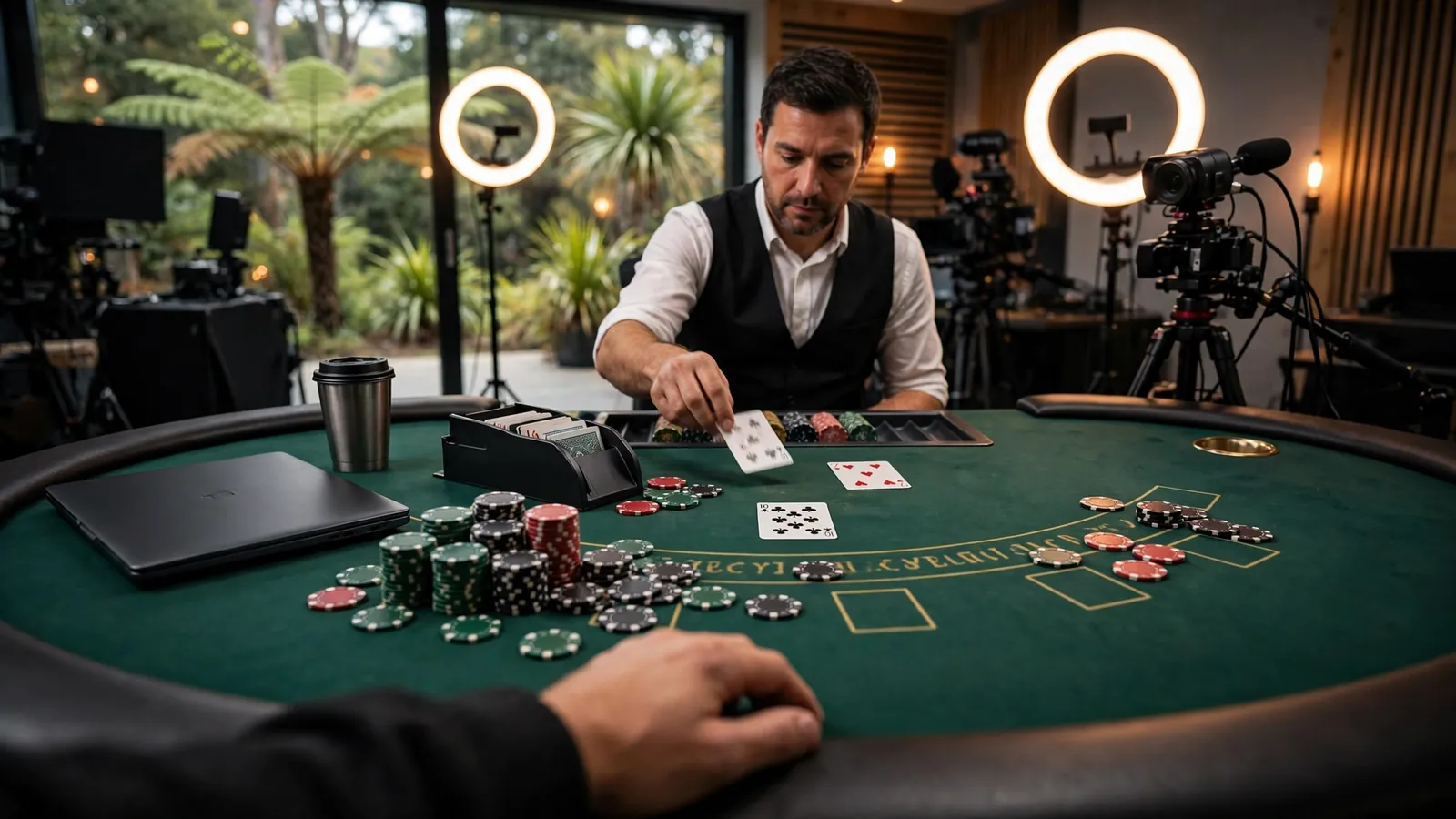
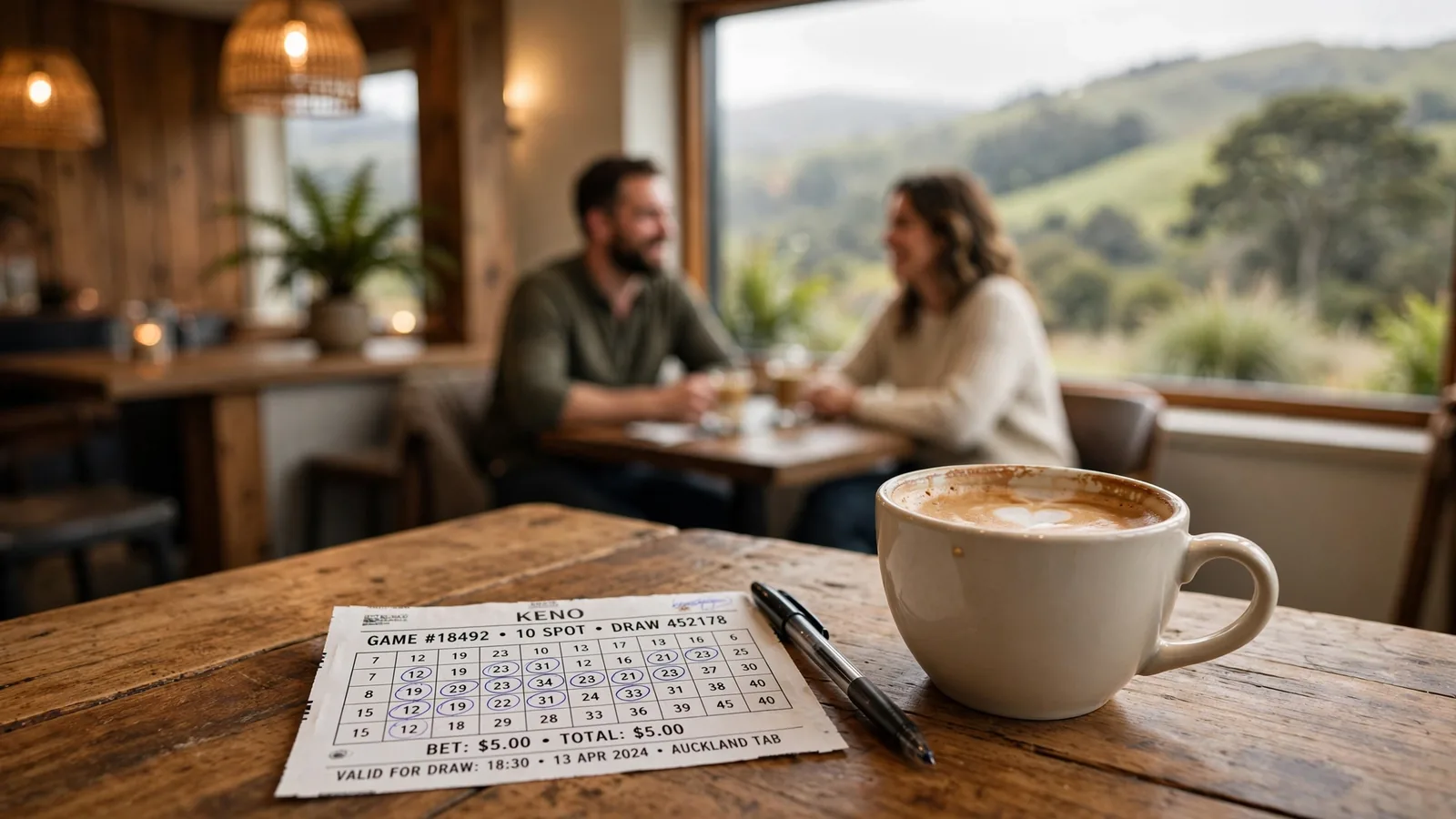
Blackjack for Real Money in New Zealand: How It Works
 Available in US
Learn how hand totals, the dealer’s cards and choices such as hitting or standing shape a real-money round, including mobile and live play.

Table of Contents
- How a Blackjack Hand Works
- Playing Blackjack on a Phone: What Changes
- New Zealand’s Online Blackjack Rules in 2026
- From Deal to Decision: Playing a Real-Money Hand
- Can Blackjack Make You Money?
- What Strategy Can—and Cannot—Change
- What Happens Inside an Online Blackjack App
- House Money, Side Bets and Payout Changes
- Moving Money In and Out of an Online Casino
- What to Expect at a Live Dealer Table
How a Blackjack Hand Works
Blackjack is a comparison between your hand and the dealer’s. The aim is to reach 21, or finish closer to it than the dealer, without going over. A hand that exceeds 21 is a bust and cannot win against the dealer, even if the dealer later goes over as well. The target is therefore not simply to make 21: the result depends on both your total and the dealer’s.
A round starts with two cards for each player and two for the dealer. In many versions, one dealer card is face up and the other face down. The face-up card gives you some information about the dealer’s position, but it does not show the complete hand. You make decisions about your own cards while the dealer’s final total is still unknown.
The choices attached to your hand
You can hit to take another card. This may improve a low total, but it also creates the possibility of going over 21. The choice is about weighing the current total against the uncertainty of another card; a hit is not automatically good just because it adds to your score.
Choosing a real-money blackjack site in New Zealand calls for attention to the information available about each operator. Use these notes as a concise reference when deciding what to investigate further.
License: Malta Gaming Authority, licence no. MGA/B2C/370/2017 Play Grand lists a Malta Gaming Authority licence, number MGA/B2C/370/2017. You can use that licence detail as a point of reference when assessing the operator.
Payout speed: 1-3 business days Lamabet lists a payout speed of 1–3 business days. This gives you a stated timeframe to consider when reviewing its real-money offering.
License: Malta Gaming Authority, licence no. MGA/B2C/394/2017 N1 Casino lists a Malta Gaming Authority licence, number MGA/B2C/394/2017. You can use this licence information as one factor in your assessment.
Payout speed: 1-3 business days Wintino lists a payout speed of 1–3 business days. You have a stated timeframe to take into account when considering the operator.
License: Curaçao Gaming Authority, licence no. OGL/2024/165/0185 BitStarz lists a Curaçao Gaming Authority licence, number OGL/2024/165/0185. This gives you a specific licensing detail to check as you assess the operator.
License: Tobique Gaming Commission, licence no. 0000064 Neospin lists a Tobique Gaming Commission licence, number 0000064. You can consider this licensing information as part of your review.
License: 07017519840 · Payout speed: 1-3 business days Zotabet lists licence number 07017519840 and a payout speed of 1–3 business days. These are the available details to consider when reviewing its offering.
License: Tobique Gaming Commission, licence no. 0000091 7Bit Casino lists a Tobique Gaming Commission licence, number 0000091. You can use this detail as a reference point when evaluating the operator.
License: Tobique Gaming Commission, licence no. 0000002 Ricky Casino lists a Tobique Gaming Commission licence, number 0000002. This licence detail can help inform your assessment of the operator.
You can stand to keep your current hand and take no further cards. This avoids the risk of busting through another card, but leaves the hand as it is. If the dealer later finishes with a higher total that has not gone over 21, your hand loses.
You can double down under the table’s rules. This increases the stake attached to the hand while limiting what you can do next: the usual structure is that you receive one more card and then stand. Because the decision commits more money before the hand is complete, it changes both the potential result and your remaining options.
You can split when your first two cards form a pair, creating two hands to play separately. Each hand is then resolved on its own, and the split requires an additional stake under the table’s rules. Splitting is not simply a way to replace an unwanted hand: it turns one starting hand into two separate outcomes, each of which can win or lose.
These options are conditional rather than interchangeable. The cards you receive, the action already taken, and the table rules determine which choices remain available. Before playing for money, it is worth checking the rules displayed for that table: the same apparent hand can lead to different choices under different conditions.
The dealer’s rules matter too
The dealer does not make the same series of decisions as a player. The dealer follows a fixed drawing rule, and the table specifies how that rule applies. One distinction is whether the dealer hits or stands on a soft 17. A soft hand contains an ace being counted in a way that allows the total to remain flexible; the rule determines whether the dealer draws again at that particular total.

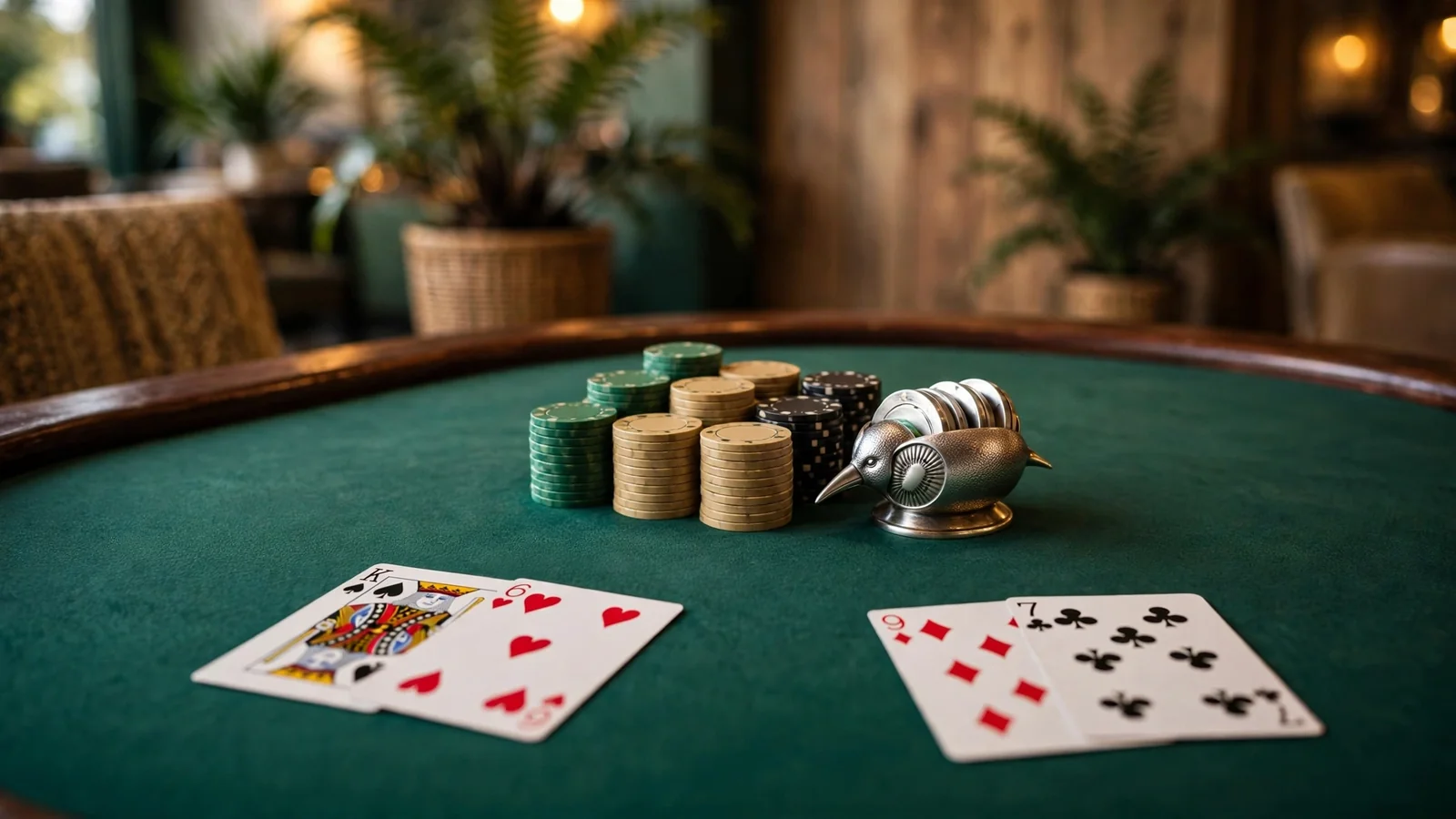
That difference can affect the dealer’s eventual hand and therefore the chance that your standing hand will beat it. The number of decks also changes the conditions under which cards appear. Surrender may be available at some tables, allowing you to give up the hand and forfeit half the stake rather than continue. It is a separate option from hitting or standing, and it is not offered everywhere.
These details should be read as parts of the game, not as small print unrelated to play. A table’s rules determine what the dealer must do, which player actions are permitted, and how an initial hand can develop. When you compare online blackjack tables, the game name alone does not tell you all of those terms.
A natural blackjack and its payout
A natural blackjack is a two-card hand that totals 21. It is distinct from reaching 21 by taking further cards: the number of cards matters to this particular result. A natural often receives a special payout, but the amount depends on the table. Some tables pay 3:2, while others pay 6:5. A specialist review has reported both payout structures, so check the displayed table rules rather than assuming one applies.
Attention: Natural blackjack payouts vary by table; some pay 3:2 while others pay 6:5, so always check the rules instead of assuming a specific rate.
That payout changes what a winning natural returns; it does not change the hand’s target or make other winning hands naturals. The distinction is relevant whether you are playing online blackjack for real money or using a play-money version to learn the controls. A no-money game can help you understand when the interface offers a hit, stand, double down, or split, but it may not reproduce every table’s rules or payout terms.
Playing with friends without money also leaves the basic contest intact: each hand is still measured against the dealer’s hand. The stakes may be absent, but the decisions and the risk of going over 21 remain part of the game. For real-money play, the table’s rule display is essential because two games labelled blackjack can treat a natural, a soft 17, or a surrender differently. Those variations do not replace the objective; they change the conditions under which you pursue it.
Playing Blackjack on a Phone: What Changes
A phone gives you a smaller control surface and a connection that may change as you move. Those constraints apply whether you open a casino in a mobile browser or use its app. The game may be the same one offered on a computer, but the way you see and operate it is different: buttons occupy more of the screen, information can be compressed, and a video stream places extra demands on your data connection.


Before playing blackjack for real money on a phone, check that the table and its controls fit the display. You need to be able to read the bet amount and the game’s prompts, and to distinguish the available controls without accidentally tapping a neighbouring one. A cramped layout can make a routine action harder to confirm. If the interface obscures important information, rotating the phone or switching to a different table may make it easier to use.
The main practical divide is between software-dealt tables and live dealer tables. A software-dealt game presents cards and controls directly on the screen; a live game also streams a dealer and physical cards. The stream is what makes live play more demanding of a phone’s data allowance and connection. A specialist review puts live dealer data consumption at approximately 500MB to 1GB per hour. Treat that as an estimate, not a fixed rate: the amount used depends on the stream and how long you watch it.
If your connection weakens, video may pause or become less clear, while the controls and the stream may not feel perfectly synchronised. Avoid making a decision until the interface has caught up and you can see the current state of the round. A stable Wi-Fi connection can help limit mobile-data use, but the important point is to check which connection is active before starting a long session. If you rely on a capped mobile plan, live video can use a substantial share of the allowance; a software-dealt table avoids the continuous video stream.
A specialist review estimates that live dealer games consume approximately 500MB to 1GB of data per hour.
The amount needed to join a table can also differ by format. A specialist review reports that some RNG blackjack tables set a minimum of NZ$0.50 or NZ$1, while the live dealer tables it describes have minimums ranging from NZ$5 to NZ$25. These are reported table settings, not a promise that every casino offers those amounts. Check the minimum shown on the specific table before entering, because it determines whether the game suits the amount you intend to stake. A live table that streams well on your phone may still be unsuitable if its entry minimum is too high for your budget.
On a small screen, take care when entering or adjusting a stake. Check the displayed amount before confirming it, particularly if the interface uses compact buttons or a pop-up control. This is a device-use issue rather than a change to the rules: the phone does not make a table’s minimum smaller, nor does it make a displayed stake less important. If the controls are difficult to read or operate, do not proceed until you can verify the selection.
A phone can be used to access online blackjack at home, but “at home” does not remove the practical checks. You still need a suitable connection, a readable interface and a table whose minimum fits your intended stake. A free-play mode, where offered, is separate from wagering real money; using it does not place a cash stake. When real money is involved, confirm the selected table and amount before joining rather than relying on a tap that may have landed differently than intended.


An app is not automatically the better choice than a browser. The useful comparison is how each option works on your particular phone: whether the display remains readable, the controls respond clearly, and a live stream plays without consuming more data than you intend to use. Some players may prefer a browser for occasional access; others may find an installed app easier to open. Neither choice changes the basic mobile constraints of screen space, connection quality, data use or table minimums.
For a practical check, open the intended table and inspect its layout before committing money. Confirm that the minimum is visible, that the controls are easy to distinguish, and—if it is live—that the video plays reliably on your current connection. These checks help you decide whether that table is workable on your phone; they do not guarantee a particular result or make a real-money game suitable for every budget.
New Zealand’s Online Blackjack Rules in 2026
For Kiwis, the key legal distinction is where an online casino is based. New Zealand law does not permit domestic online casinos, but a person in New Zealand can gamble online with a casino based overseas. The player is not committing an offence merely by using an offshore site. That does not mean an offshore operator was historically licensed or supervised by a New Zealand regulator: before the 2026 law, a customer who wagered with one had no domestic government recourse if a dispute arose.
The Online Casino Gambling Act 2026 changed the framework. Its provisions began applying on 1 May 2026, establishing New Zealand’s first domestic licensing system for online casino gambling. The change is a move towards regulating operators that serve the local market; it does not make New Zealand-based online casinos permissible.
Legal Deadline
Operators without a licence must stop providing online casino gambling to New Zealand customers from 1 December 2026.
How the licensing framework works
The new system provides for no more than 15 online casino licences. The Department of Internal Affairs (DIA) oversees the regulatory framework and is responsible for allocating licences. The Gambling Commission has a separate role: it issues online casino licences and approves changes to their conditions. In other words, the DIA oversees the system and allocates the available licences, while the Commission handles formal licensing decisions and changes to licence terms.
The shift is not instantaneous. The Act provides a transition from 1 May to 1 December 2026. Online casinos that were already serving people in New Zealand before the Act began may continue during that period, subject to the transitional provisions. The full licensed regime is not expected to be operational until 2027. Therefore, in 2026, the legal position depends in part on whether an operator was already active in the market before the transition began and whether it complies with the rules that apply during that period.
After the transition, an operator without a licence must stop providing online casino gambling to New Zealand customers from 1 December 2026. Operators that have not applied for a licence must also cease providing the service by that date. If an application is declined, the operator must end its online casino operations in New Zealand and leave the market. Unlicensed operation is expected to become an offence around mid-2027, with enforcement action and fines possible for operators. These consequences concern the provider; they do not make a player’s use of an offshore casino a criminal offence.
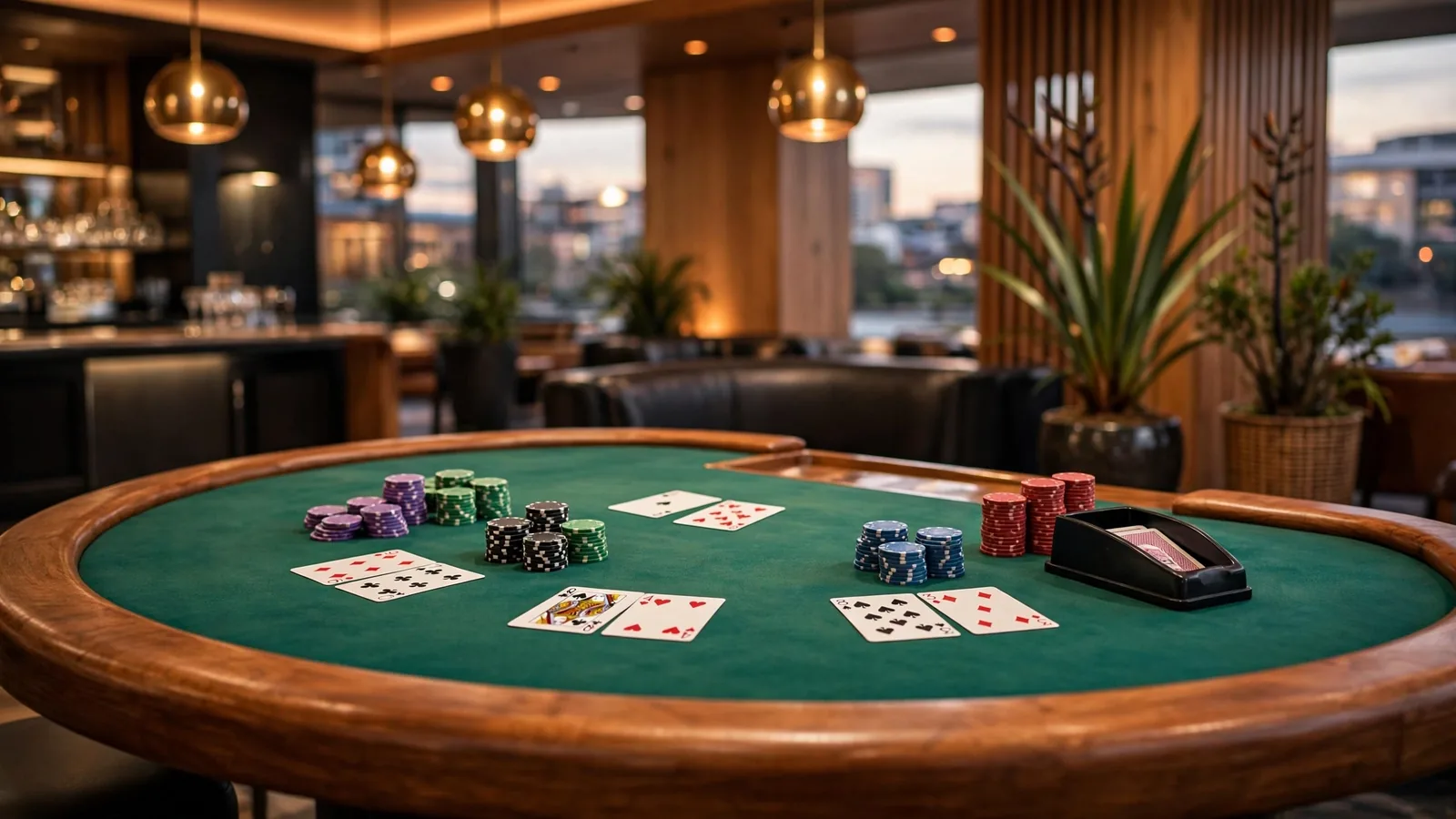

What the change means for a player
A licensing framework gives regulators authority over operators that are licensed under it. It does not mean every casino accessible from New Zealand already holds a New Zealand licence, particularly during the transition. Nor does the existence of an overseas licence make that licence a New Zealand authorisation. The legal status of a provider and the legal position of the person using its site are separate questions.
When considering real-money blackjack online, keep the timeline in view. In the transition period, some previously operating providers may continue under transitional rules, while the full domestic licensing system is still being established. From 1 December 2026, providers without a licence must stop serving the New Zealand market. The licensing system is intended to be fully operational in 2027, so the framework should not be described as already complete during 2026.
These rules concern online casino gambling as a market, not the particular version of blackjack on a table. Whether a game is American-style, software-dealt or run by a live dealer does not by itself determine the operator’s New Zealand status. The central regulatory questions are where the provider operates, whether it falls within the transition, and whether it holds the required licence once the licensing regime applies.
From Deal to Decision: Playing a Real-Money Hand
A real-money round begins when you choose a table, set a stake and confirm the bet. The deal then gives each player two cards face up. The dealer also receives two cards, with one visible and the other face down. You make your decisions using your own cards and the dealer’s exposed card; the hidden card is not available when you choose.
Initial Deal Setup
Each player receives two cards face up, and the dealer receives two cards: one visible and one face down.
The aim is to finish with a higher total than the dealer without going over 21. The first decision comes after the initial deal. You can hit to receive another card, or stand and keep your current hand. A hit may improve your total, but it can also take you past 21, which ends your chance to beat the dealer in that round. Standing avoids that risk, but leaves the total you already hold.
If your first two cards form a pair, the table may let you split them. This separates the pair into two hands, each played as its own contest against the dealer. You then make decisions for each hand in turn. Splitting changes the shape of the round: instead of one hand to manage, you have two, and each can reach a different result. The interface shows which hand is active so you can make the appropriate choice.
You may also be able to double down. This commits additional stake to the hand in exchange for taking a card under the table’s doubling rule. Because the choice changes both your exposure and the remaining options for that hand, it is not simply another way to request a card. Check the table controls and displayed rules before confirming it; the available actions can depend on the game’s rules and the state of the hand.

Once you have acted on every hand, the dealer reveals the face-down card and plays according to a fixed drawing rule. The dealer must keep drawing while the total is below 17, then stop at 17 or higher. That rule matters because you do not decide how cautiously the dealer plays. Your choices are made first, and the dealer’s required draws may later take the total above 21 or bring it closer to yours.
The result is determined by comparing hands. A total above 21 loses; a hand that stays at or below 21 must still beat the dealer’s total to win. If the dealer goes over 21, a hand that has not gone over can win. If the dealer remains within the limit, a lower player total loses and a higher one wins. The exact settlement for equal totals depends on the game’s rules, so consult its information panel rather than assuming how a tie is handled.
When you play blackjack online for real money, the buttons translate these decisions into instructions for the game. Before placing a stake, confirm that you have selected the intended table and can see its rules. During the round, wait for the interface to show that it is your turn; after choosing an action, check that the hand display updates before proceeding. This makes it easier to distinguish a confirmed decision from a button press that has not yet registered.
Before Playing
- Select the intended table
- Confirm the table rules
- Verify the bet amount
- Check the hand display updates
A real-money blackjack hand is therefore a sequence: stake, deal, player decisions, dealer play and settlement. The dealer’s drawing rule sets the final part of that sequence, but it does not remove the uncertainty in your own hand. A decision can shape how the round develops; it cannot determine the dealer’s eventual cards.
Can Blackjack Make You Money?
Yes, you can finish a hand ahead of your original stake, and a run of hands can leave your account balance higher than it was when you started. That is a possible short-term result, not evidence that blackjack provides a dependable income. A win records what happened in a particular hand; it does not change the mathematical terms governing the hands that follow.
The distinction is between outcome and expectation. In a single hand, the result depends on the cards dealt and the decisions made. Over many hands, the rules determine the game’s expected balance between player and casino. Random results can depart sharply from that expectation over a short period, in either direction. A player can win several hands and still face a game whose long-run expectation favours the house.
A useful reference point is an estimate of a 0.43% house edge for a specific eight-deck game. That estimate assumes a 3:2 natural-blackjack payout, the dealer standing on soft 17, doubling after a split, no surrender, and resplitting up to four hands, with perfect basic strategy. It describes the mathematical disadvantage under that particular combination of rules and decisions. It is not a prediction that every player will lose precisely that proportion in a session, nor does it tell you what you will win or lose in a particular visit.


The percentage also needs the right interpretation. It is a long-run expectation relative to the amount wagered, not a fee removed from every hand. Individual results vary: you may win more than you wagered, lose a stake, or end a session with a balance that differs from the expected result. As play continues, the house edge describes the direction of the game’s average effect; it does not make outcomes predictable hand by hand.
There is no fixed amount of money you make by playing. Your result depends on the stakes you choose, how much you wager over time, the table’s rules, and the cards you receive. Because winnings and losses are uncertain, a previous winning session cannot establish what a future session will return. Nor does staying at a table after a win turn that result into a repeatable earning method.
This is why “winning money” and “making money” are not interchangeable claims. Winning money can mean that a hand pays out or that your balance is higher when you stop. Making money as a reliable activity would require a lasting advantage over the game’s expected terms. The house-edge estimate above describes a game in which the casino retains that mathematical advantage, even when the player follows perfect basic strategy.
Treat any amount you win as a result of play, not as income you can count on. The relevant question is not only whether you can leave ahead, but whether the rules give you a persistent edge. In the stated example, they do not: the expected advantage remains with the house.
House Edge Example
In a specific eight-deck game with perfect basic strategy and 3:2 payouts, the estimated house edge is 0.43%.
What Strategy Can—and Cannot—Change
Basic strategy is a set of decisions matched to the cards you hold and the dealer’s visible card. It tells you when to hit, stand, split or double down under a particular set of table rules. Following it consistently can reduce the house’s mathematical advantage compared with making choices without a plan. It does not alter the cards already dealt, and it cannot ensure that a hand or session ends in profit.
The size of that advantage depends on the rules as well as your decisions. With perfect basic strategy, the house edge is approximately 0.43% under a specific combination: eight decks, a 3:2 natural-blackjack payout, the dealer standing on soft 17, doubling after a split, no surrender, and resplitting to four hands. Change a rule or make a different decision, and that figure no longer describes the game. It is a long-run measure for those conditions, not a prediction of what will happen in your next hand.
That distinction matters if you bet real money online. Sound decisions can make the game less costly mathematically, but they cannot turn a negative expectation into a reliable income. Increasing a bet after a loss does not make the earlier result more likely to reverse; it simply puts more money at risk on the next decision. There is no strategy that guarantees you can win your money back, so treat each stake as money you may lose rather than as a step toward a promised recovery.

Card counting tries to use information about cards already dealt to judge how the remaining cards may affect the odds. A specialist review notes that counting is theoretically possible at live tables with manual shoes and substantial deck penetration. In practice, those conditions are not enough by themselves: keeping an accurate count while playing through an online interface presents significant barriers, and the method does not guarantee a winning result. It is not a dependable shortcut to making money from blackjack.
A practical approach is narrower: learn the strategy for the rules of the table, make each decision on that basis, and do not confuse a good decision with a guaranteed outcome. Strategy can reduce avoidable disadvantage. It cannot remove chance or promise that your balance will rise.
What Happens Inside an Online Blackjack App
An online blackjack app can present more than one game format. In RNG blackjack, software generates and shuffles the cards; there is no physical deal shown through a live table. You make a decision on screen, the software applies the game’s rules, and the hand proceeds to its result. That removes the pauses involved in a live dealer handling cards and waiting for players to act.
A specialist review gives a specific pace comparison: an RNG hand takes approximately 15 to 20 seconds from deal to result, while a live-dealer hand takes 30 to 45 seconds. These figures describe the review’s comparison, not a fixed duration for every app or table. Your decisions, the interface and the game’s settings can all affect how quickly a round finishes.
Software-generated cards with a faster pace, typically taking 15 to 20 seconds per hand.
Physical cards dealt by a human on stream, typically taking 30 to 45 seconds per hand.
That faster cycle changes the number of hands you may encounter in a session. It does not change the basic logic of the game: the software still follows the table’s stated rules, and each hand is settled according to its outcome. Speed is therefore a feature of how the game is delivered, not evidence that it is easier to win or a reliable way to make money.
If you want to inspect a blackjack app before wagering, look for a version that allows play without real-money stakes, if the operator offers one. This can let you see how the controls and round flow work. A no-money mode does not establish that the real-money version has identical terms: check the rules and payout information for the specific table you intend to use.
When comparing real-money apps, the game format matters more than the label “app.” An RNG table is software-dealt and moves through hands faster; a live table depends on a dealer conducting the game. An app may provide either format, so its appearance alone does not tell you which one is running. Check the table description before joining.
The same distinction applies when you encounter choices such as taking even money. The app processes the available choice under that table’s rules; it does not turn a faster software round into a different kind of blackjack. For a considered decision, you need to know the rules and the meaning of the choice, rather than relying on the app’s pace or interface to make it for you.

House Money, Side Bets and Payout Changes
“House money” is a way of describing winnings that you have not withdrawn, not a separate kind of balance with different rules. Once a win is credited to your casino account, it remains your money to use or withdraw, subject to the operator’s terms. If you put some of it on another hand, that is a new wager. The fact that it came from an earlier win does not change how the next hand is settled.
The blackjack payout printed in the table rules does matter. A specialist blackjack review reports that natural blackjack payouts can be 3:2 at some tables and 6:5 at others; that report should not be read as a guarantee about every casino or table. For the same wager, 3:2 returns more on a natural than 6:5. The difference is not merely a change in how winnings are labelled: moving from 3:2 to 6:5 raises the house edge by approximately 1.4 percentage points.
That change affects the expected cost of playing over repeated hands. It does not mean the casino takes back winnings already credited, nor does a profitable hand become “house money” in a mathematical sense. A payout rule changes the settlement of a particular hand; the house edge describes the effect of the rules across play.
Side bets are separate wagers, so their terms need to be read independently from the main hand’s payout. A side bet does not alter the main game’s natural-blackjack payout unless the table rules explicitly connect them. Likewise, an even-money offer is a choice about settling a hand against a dealer’s exposed card, not a source of extra funds or a distinct category of winnings. Check the displayed rules before placing either wager: the label alone does not tell you its cost.
Changing a natural blackjack payout from 3:2 to 6:5 increases the house edge by approximately 1.4 percentage points.
Moving Money In and Out of an Online Casino
The currency shown in your casino account affects how a payment is recorded and whether a conversion is needed. Many international casinos that serve Kiwis accept New Zealand dollars. When your account and payment are both in NZD, you avoid foreign-exchange fees charged for converting between currencies. If the account uses another currency, your bank or payment provider may apply a conversion and its own charges.
Payment options vary by operator. Credit and debit cards, bank transfers and e-wallets such as Skrill and Neteller are among the methods offered by online casinos. Some also list PaysafeCard or POLi. A method appearing on one casino’s cashier page does not mean it will be available at another, or for every account. Check the options displayed for your account and read the payment terms before choosing how to fund it.
The rules applying to an operator matter too. Under New Zealand’s new licensing framework, licensed operators must not accept credit cards or buy-now-pay-later payments. As a result, a card option advertised by an international casino should not be treated as proof that it is available through a licensed service in New Zealand. Debit cards are a separate payment method, but their availability still depends on the operator and its requirements.
Withdrawals may not use precisely the same route as deposits. The cashier’s instructions and account terms determine which withdrawal methods are offered and what checks apply. Confirm that you can access a suitable withdrawal option before transferring money; a convenient way to deposit is not, by itself, evidence that withdrawals work the same way.
For real-money blackjack, treat the cashier as part of the account decision, not as an afterthought. Check the account currency, any conversion charges, the available payment methods and the operator’s applicable rules before you deposit.

What to Expect at a Live Dealer Table
At a live dealer table, the cards are physical, but you take part through an online interface. The dealer runs the round at the table, while you use the controls on screen to make the decisions the game permits. A video feed shows the dealing, and on-screen information helps you follow the hand and see its status.
That combination changes what you are watching. In software-dealt blackjack, the game produces the cards digitally. In a live game, the dealer handles actual cards on camera, so the video is part of how you observe the round rather than just a visual layer over software dealing. The interface connects your decisions to the dealer’s game; it does not mean you handle the cards yourself.
The stream can affect how quickly the game appears to move. The dealer has to conduct the round, and video may arrive with a delay. If the image pauses or seems behind the on-screen controls, the information you see may not update at precisely the same moment as the physical action. A specialist review also notes streaming delays and higher bets as possible features of live-dealer games; those are not fixed conditions at every table. Check the table’s displayed minimum before joining rather than assuming it matches a software game.
For real-money live blackjack, the practical distinction is that the dealer and cards are real, while your participation remains remote. You watch the feed, read the displayed game information and submit decisions through the interface. The pace depends partly on the live dealing process and the stream, so it can feel less immediate than software-dealt play. That slower, observed format is the defining trade-off: you see a dealer conduct the round, but you depend on the video and interface to follow it.
Is playing live blackjack online legal in New Zealand?
Yes, you can legally gamble online in New Zealand if the mobile casino is based outside New Zealand.
What is the difference between 3:2 and 6:5 blackjack?
The difference is the payout for a natural blackjack: 3:2 returns more than 6:5. A 6:5 payout also increases the house edge by approximately 1.4%.
Does blackjack always pay 3:2?
No. Some tables pay 6:5 for a natural blackjack, so check the payout shown in the table rules.
Published by the Casino Bonus Tips NZ team.