Slots for Real Money in New Zealand: A Guide
 Available in US
A practical overview of spin mechanics, slot formats, bonuses, payments and safety for New Zealand players.

Table of Contents
- How Real-Money Slots Work from Spin to Payout
- Playing Offshore Slots from New Zealand
- What Changes Between Classic, Video and Megaways Slots
- How to Assess Online Slots Without a Best-of List
- Bonus Rounds, Bonus Buys and Wagering Requirements
- Casino Slots, NZD Balances and Recreational Winnings
- Deposits, Withdrawals and Payment Timing
- Android Deposits and First-Withdrawal Verification
- Playing Slots on a Mobile Screen
- Licensing and Safety for New Zealand Players
How Real-Money Slots Work from Spin to Payout
A real-money spin begins when you set a stake and start the game. The game then produces an outcome, which may return a payout or leave the stake lost. Each spin is independent: earlier wins and losses do not change the odds or determine what the next spin will show. A run of losing results does not make a win due, and a recent win does not make another win more likely.
The stake is the amount placed on one spin. Changing it changes how much money is at risk on that outcome and, when a win occurs, can change the payout because winnings are calculated in relation to the stake and the game’s pay rules. It does not make a particular result more likely simply because the stake is higher. To understand how a game’s returns are described over time, look at its RTP, or return to player.
RTP is a theoretical measure of the share of wagers a slot returns to players across a very large number of spins over the game’s lifetime. For a slot with a 97% RTP, the long-run calculation is $97 returned for each $100 wagered. That figure describes an aggregate expectation, not a fixed amount returned to each player. It does not mean that you will get back 97% of your money in a single session, or that every group of spins will produce that proportion.
Choosing a real-money slot site in New Zealand means checking the details that matter to you, such as licensing and payout information. Use these operator notes as a starting point for your own checks.
License: Malta Gaming Authority, licence no. MGA/B2C/370/2017 Play Grand lists a Malta Gaming Authority licence, number MGA/B2C/370/2017. You can use that licence detail as one point of reference when assessing the site.
Payout speed: 1-3 business days Lamabet lists a payout speed of 1–3 business days. Check the terms to see how that timing applies to your chosen payment method.
License: Malta Gaming Authority, licence no. MGA/B2C/394/2017 N1 Casino lists a Malta Gaming Authority licence, number MGA/B2C/394/2017. You can take this licence information into account when reviewing the operator.
Payout speed: 1-3 business days Wintino lists a payout speed of 1–3 business days. Review its terms for details relevant to your payment method.
License: Curaçao Gaming Authority, licence no. OGL/2024/165/0185 BitStarz lists a Curaçao Gaming Authority licence, number OGL/2024/165/0185. This licensing detail may help inform your checks before playing.
License: Tobique Gaming Commission, licence no. 0000064 Neospin lists a Tobique Gaming Commission licence, number 0000064. You can consider this information as part of your assessment of the operator.
License: 07017519840 · Payout speed: 1-3 business days Zotabet lists licence number 07017519840 and a payout speed of 1–3 business days. Check the operator’s terms for further details about payouts.
License: Tobique Gaming Commission, licence no. 0000091 7Bit Casino lists a Tobique Gaming Commission licence, number 0000091. You can use this detail as one part of your review.
License: Tobique Gaming Commission, licence no. 0000002 Ricky Casino lists a Tobique Gaming Commission licence, number 0000002. Consider this information alongside your own checks of the operator.
This distinction matters because a session is only a small part of the total play represented by RTP. Your result depends on the outcomes of the spins you make, and independent outcomes can vary. The RTP does not tell you when a payout will arrive or how large an individual win will be. It also does not turn a losing sequence into evidence that the game must soon pay.
When comparing the effect of stake size with the long-term return measure, keep the two roles separate. The stake sets the amount exposed on each spin; RTP describes the game’s theoretical return across play over time. Neither gives you a reliable forecast for the next spin. A lower stake reduces the amount at risk per spin, while the game’s RTP remains a long-run property rather than a session target.
A no-money simulator can demonstrate the basic sequence of setting a stake, spinning and seeing an outcome without placing real funds at risk. Its results do not change the independence of real-money spins or make a later outcome predictable. Before playing for money, treat each stake as an amount that may be lost and read RTP as a statistical description of the game, not a promise of repayment.

Playing Offshore Slots from New Zealand
For New Zealand adults, playing pokies through an online casino based overseas is distinct from operating an online casino inside the country. The Gambling Act 2003 was directed at operators running casino services from within New Zealand; it did not make an individual player liable simply for accessing an overseas site. That distinction explains why real-money play through offshore websites has been available to New Zealanders even though domestic online casinos have not operated in the country.
The position in 2026 also depends on the transition to a new legal framework. The Online Casino Gambling Act 2026 came into force on 1 May 2026 and established New Zealand’s first domestic licensing regime for online casino gambling. It does not mean that every offshore casino can immediately operate under a New Zealand licence. During the transition, only providers that were already serving people in New Zealand before that date may continue to do so, and only until 1 December 2026 under the transitional provisions. The fully operational licensed regime is expected in 2027.
This timing matters because “offshore” describes where an operator is based, not whether it has a New Zealand licence. The country still prohibits domestic online casinos, while the new Act creates a route for licensing providers under a domestic regime. A provider’s ability to continue during the transition is not the same thing as holding a New Zealand licence. Nor does the framework change the distinction between a player using a site and a company providing the service.
Attention: The availability of an offshore site does not prove it is locally licensed or compliant with New Zealand’s current regulatory framework.
What the player and operator rules mean
Under the Gambling Act 2003, the restriction concerned setting up or running an online casino from within New Zealand. It was not a rule making adult customers criminally responsible for playing at casinos based in other countries. In practical terms, New Zealanders of legal age have been able to access offshore online casino services, including games played for money.
The Online Casino Gambling Act 2026 changes the operator framework rather than turning ordinary play into an offence. During the stated transition, existing providers may keep serving New Zealand customers until the transition ends. From 1 December 2026, a provider that has not applied for a licence must stop conducting online casino gambling in New Zealand. A provider whose application is declined must also cease those operations and leave the market. The licensing regime is expected to be fully operational in 2027, so the rules governing providers are changing over time.
For you as a player, the key point is that legal access and government oversight are separate questions. The fact that an overseas casino can be reached from New Zealand does not by itself establish that the operator is licensed locally, or that it has the same status as a provider operating under the new regime. During the transition, a site’s continued availability may reflect its eligibility to operate under transitional provisions rather than a completed licensing decision.

Reading “real money” in context
When you see a site offering online slots for real money, the phrase describes the activity: you stake money on a game and may receive a payout. It does not tell you where the company is based, which rules apply to its operations, or whether it falls within the transitional category. Those are separate details. For New Zealand players in 2026, the location and operating status of the provider matter because the law is moving from the earlier framework toward domestic licensing.
The distinction also prevents a common misunderstanding: a prohibition on domestic operators is not the same as a ban on New Zealand adults playing at overseas casinos. The older law targeted operators based in New Zealand, and the 2026 Act introduces a licensing framework for providers. Neither point should be collapsed into a claim that every offshore site is locally licensed, or that a player’s access alone proves an operator’s compliance.
Because the transition has defined dates, statements about availability can become outdated. A provider that was permitted to continue serving customers during the transition may have to stop if it does not apply for a licence by the relevant deadline, or if its application is declined. Conversely, the existence of the new licensing system does not mean that the full regime is already operational in 2026. When interpreting claims about offshore pokies, keep the provider’s location, its transitional status, and the player’s separate legal position distinct.
What Changes Between Classic, Video and Megaways Slots
A slot’s format describes how its reels and symbols are arranged, and which features can appear during play. It does not, by itself, tell you whether a game is available for free play, real-money play or a tournament. Those are separate conditions, so check the game and offer details rather than treating a format label as a promise of cash prizes.
Typically feature three reels and a straightforward layout without bonus rounds.
Generally use five reels and include features like wild symbols and scatter-triggered free spins.
Feature a changing reel layout where the number of symbols on each reel varies with every spin.
Classic pokies use a straightforward layout: typically three reels, with no bonus rounds. That simplicity makes the result easy to read on screen, but it does not mean that every game with three reels has identical rules. If you are looking for three-reel pokies to play for real money, check the specific game’s stake options and rules before starting. Reel count identifies the format; it does not establish how much a game pays or whether a particular version is offered for cash play.
Video pokies generally use five reels and can add features that are absent from the classic format. Wild symbols can substitute for other symbols in combinations, while scatters can trigger features such as a free-spins round. The reels and extra features give the game more moving parts, but a feature’s presence does not guarantee a win. Read the game rules to understand what its symbols do.
Megaways changes the reel layout from one spin to the next: the number of symbols shown on each reel varies. The visible arrangement is therefore not fixed in the same way as a classic three-reel layout or a typical five-reel video game. That changing structure is the defining feature; it is not a promise of a larger payout.
These categories can help you narrow down what you want to play, but they do not identify a “best” game or establish that a free slot tournament pays real money. Free play, tournament entry and cash wagering are distinct conditions. A no-deposit offer or tournament label should be checked for its own terms rather than inferred from the game’s reel format. If your priority is a simple layout, look for classic reels; if you want symbol features or free spins, check the video game rules; if you prefer a changing number of symbols, look for Megaways.

How to Assess Online Slots Without a Best-of List
When you compare online slots for real money, the return to player figure, or RTP, is one useful piece of information. It describes the proportion of wagered money a game is designed to return across its entire lifetime. It does not tell you what you will receive from a particular game session, or whether one slot will pay you during a particular visit.
Every slot has an RTP percentage. The figure is a long-run measure: it applies to the game’s results accumulated over its lifetime, not to a promise made to each player. A higher RTP indicates a higher theoretical share returned across that large body of play. It does not mean the game will return that share to you personally, nor does it identify a slot that is certain to produce a win.
Consider a slot with an RTP of 97%. Over the game’s lifetime, the theoretical return is $97 for each $100 wagered. That is an aggregate calculation, not a session forecast. Your own results can be higher or lower, and the percentage does not set a minimum payout for any player. If you play the same game for a short period, your result is not expected to settle neatly at the stated proportion.
This distinction matters when you are choosing casino slots online for real money. RTP can help you understand a game’s stated long-term payback, but it cannot tell you what will happen next. Treating it as a prediction can make a technical statistic sound like a personal guarantee. It is neither: it describes the game over its entire lifespan, while your experience covers only part of that span.
For a slot with a 97% RTP, the long-run theoretical calculation is $97 returned for every $100 wagered across the game’s lifetime.
What RTP can and cannot tell you
RTP gives you a common measure for understanding the theoretical return built into a slot. It can be useful when you want to assess online real-money casino slots without relying on a vague claim that a game is “good” or “generous.” The percentage gives that claim a specific meaning: the theoretical proportion of wagers returned across the game’s lifetime.
It cannot rank a game by how likely it is to pay you during your next session. Nor does it tell you the size or timing of any individual outcome. A game’s long-run percentage and a player’s short-term result answer different questions. The first concerns the game’s overall theoretical return; the second is what happened during a limited stretch of play.
For that reason, a best-slots list based only on RTP would not establish which game is best for you. It would only compare one long-term measure. The number does not say whether you will enjoy a game’s presentation, how its features feel to play, or what your balance will be after a particular session. Those are not conclusions that can be drawn from RTP alone.
When you read a slot’s RTP, keep the time scale in view. The phrase “over the game’s lifetime” is essential to interpreting the figure. Without it, the percentage can be mistaken for a return rate that applies to each person or each visit. It does not. A session result can diverge from the theoretical return without contradicting the RTP, because the figure describes the total game outcomes over a far broader span.

This also means that comparing two percentages should not become a promise about your result. The figures describe theoretical long-term payback, not a schedule of payments or a prediction of when a win will occur. A higher percentage is a higher stated theoretical return over the game’s lifetime, but it cannot tell you whether you will win, how much you might win, or when an outcome will occur.
Using the figure carefully
If you are considering online casino slots for real money, use RTP as one specific data point rather than a verdict. Read it as an explanation of long-term payback, then separate that from any expectation about a short session. This keeps the measure useful without asking it to answer questions it cannot answer.
The same approach applies whether you call them slots or pokies. For NZ real-money pokies, the RTP percentage can clarify the game’s theoretical return across its lifetime. It cannot identify a guaranteed winner or tell you that a particular game will return a fixed share of your own wagers. A number can be precise while still having a limited scope.
A sound assessment therefore starts by asking what the percentage actually measures. If the answer is the game’s lifetime theoretical payback, you can use the figure on those terms. If someone presents it as evidence that a particular session will pay a particular amount, that conclusion goes beyond what RTP means. The measure describes a long-run property of the game, not an outcome reserved for you.
Bonus Rounds, Bonus Buys and Wagering Requirements
A bonus round and a bonus buy are different ways of reaching extra game features. In a bonus round entered through play, you continue spinning under the game’s normal rules until the required feature is triggered. A bonus buy instead charges a stake multiplier to enter a round directly. The first depends on the game triggering the feature; the second makes access immediate but raises the cost of that spin.
- Check the displayed price and rules before using a bonus buy
- Compare the full buy price with the stake of an ordinary spin
- Assume a bonus buy guarantees a profit or repays its cost
- Treat the bonus buy as an add-on with no associated cost
Bonus rounds are part of a slot’s design, but their entry conditions and rewards depend on the individual game. A round may change how spins work or provide a separate feature, so check the game information before staking money. The key point is that a bonus round does not automatically mean a cash profit: its outcome is still determined by the game, and the feature’s name alone does not tell you what it will return.
A bonus buy changes the price of entry. Instead of wagering the ordinary stake and waiting for a feature to trigger, you pay a multiple of that stake to start the feature directly. Specialist reviews describe bonus-buy prices ranging from 50 to 150 times the bet; a separate range reported for these features is 50 to 100 times the stake. These figures are not a single guaranteed price for every game. Availability and cost vary by site and game, so read the displayed price and rules before selecting the buy option. If the game does not offer a bonus buy, the feature cannot be entered this way.
The multiplier matters because it applies to the stake, not to a promised return. Paying a higher entry price does not ensure that a bonus round will repay its cost. It changes how much you risk on that play and how you access the feature; it does not remove uncertainty from the outcome. If you are comparing the ordinary spin with a bonus buy, compare the full buy price with the stake you would otherwise place, rather than treating the feature as an add-on with no cost.

How welcome bonuses are counted
A sign-up offer may combine a deposit match with free spins. Welcome bonuses are commonly described as a 100% match up to $500, with free spins also included. The actual offer terms determine what you receive: check whether the match applies to your deposit, how the spins are allocated, and what conditions apply to each part. The headline figure is not the same as cash immediately available to withdraw.
Wagering requirements state how much qualifying play is required before bonus funds or related winnings can be withdrawn. The stated range for welcome bonuses is 30 to 50 times the bonus amount. The calculation is based on the bonus amount, not automatically on the deposit plus bonus; read the offer’s wording to see which balance the casino uses and which games count. A higher multiplier means more qualifying wagers are required before the stated condition is met.
This requirement is not a promise that you will win enough to meet it. Each qualifying wager can change your balance, and play may finish before the requirement is complete. Nor does reaching the stated wagering total necessarily make every part of an offer withdrawable: the bonus rules determine how completion is assessed. Check whether the casino sets conditions for the bonus, the free spins, or winnings from those spins separately.
Free spins and bonus funds should therefore be evaluated as conditional parts of an offer, not as guaranteed cash. Before accepting, look for the wagering multiplier, the amount it applies to, the eligible games, and the rules governing any winnings. If a bonus-buy option appears inside a game, assess its separate stake multiplier as well; a welcome offer does not make that feature free. Keeping the offer’s wagering condition distinct from the game’s bonus-buy price makes the cost of each decision easier to understand.

Casino Slots, NZD Balances and Recreational Winnings
When you play pokies for real money, the casino account is where the value of your deposits, wagers and winnings is recorded. The currency selected for that account affects how those amounts are displayed. Overseas online gambling operators accept New Zealand dollars, and NZD may be available for both deposits and withdrawals at casinos serving New Zealand players.
If your account is held in NZD, a wager and any resulting payout are shown in that currency. This makes it easier to track the balance without mentally converting each amount. If the casino account uses another currency, the figures displayed may not match the amounts in your bank account after conversion. Check which currency the account uses before depositing; the currency shown on a game screen may not, by itself, tell you how the casino account is denominated.
A displayed balance is an account record, not a separate measure of what a spin is worth. The stake is deducted from the balance when you play, and a payout is credited in the account’s currency. Keeping the account and your own records in the same currency can make it clearer how much you have deposited and what remains available. It also avoids confusing a change caused by currency conversion with a change caused by playing.
NZD support does not mean every casino handles currency in the same way. Availability can depend on the operator and the account settings it offers. Before you transfer money, look for the currency selected for the account and confirm that it applies to both deposits and withdrawals. This is distinct from checking how long a payment takes to process, which depends on the payment method and the casino’s procedures.
Tax treatment is a separate question from the currency used. In New Zealand, winnings from recreational gambling are not taxed. That applies to recreational gambling winnings whether you played casino slots that pay real money or another form of gambling. It does not change how the casino records the balance: the account still shows deposits, stakes and payouts in its selected currency.
The distinction is useful when reviewing your own activity. A payout recorded in NZD is an amount credited to the casino balance; it is not, by itself, a statement about tax. Likewise, moving money between a casino account and another account does not change the currency in which the original play was recorded. For ordinary recreational play, the key points are to know the account currency and to distinguish account bookkeeping from the tax treatment of winnings.
Deposits, Withdrawals and Payment Timing
A deposit method and a withdrawal method are not necessarily the same. Before you add funds to a casino account, check the cashier’s rules for both directions: a payment option shown for deposits may not be available for cashing out. This matters when choosing how to play pokies with real money, because the route used to fund a balance does not by itself determine how winnings can be returned.
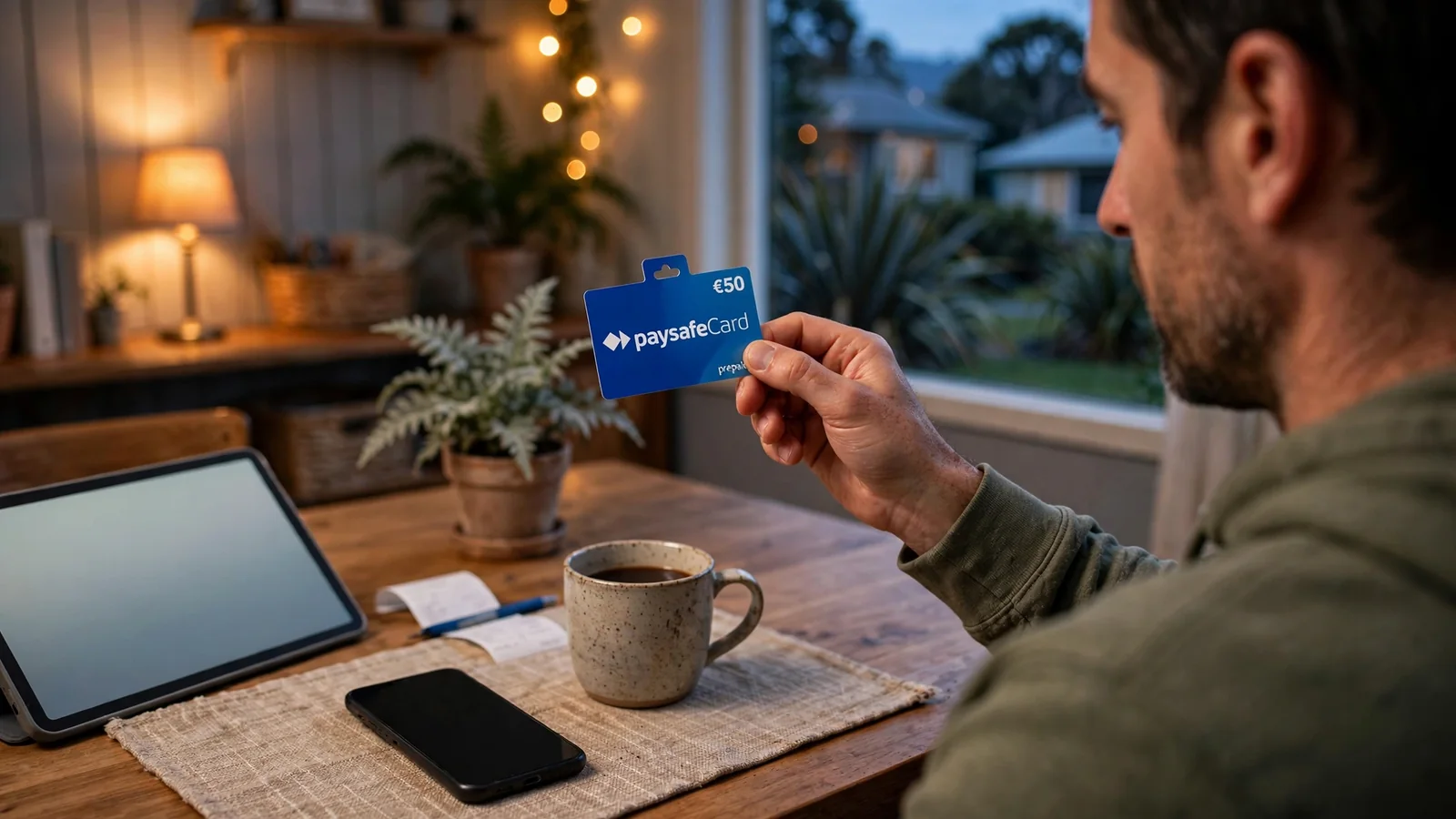
Attention: A payment method available for deposits, such as Paysafe, may not be available for withdrawals.
A specialist review reports that Paysafe deposits are available at most New Zealand casinos it covers, but that winnings cannot be paid back to a Paysafe account. Treat that as a distinction between funding and withdrawal options, not as a guarantee about every operator. Check the specific cashier’s withdrawal methods before depositing; if a Paysafe account is your only acceptable way to receive money, a deposit option alone does not meet that requirement.
Processing estimates also vary by payment type. A specialist review gives e-wallet withdrawals a stated range of 24–48 hours, card withdrawals 2–5 days, and crypto withdrawals under two hours at some sites. Those are reported timings, not a promise for an individual transaction. Skrill and Neteller withdrawals are typically reported to arrive within 24 to 48 hours.
The method can affect how long a withdrawal takes, but a published estimate does not tell you when a particular payment will arrive. Read the cashier’s stated timing alongside its terms, and distinguish the casino’s handling of a withdrawal from the later transfer to your payment account. If the displayed estimate is unclear, confirm the expected route and timing with the operator before requesting payment.
When comparing ways to play slots for real money, focus on the full cash-out path rather than the deposit button alone. Confirm which method can receive a withdrawal, whether it matches the method you intend to use, and what timing the casino states for that method. Payment options can differ between casinos, so a method available in one cashier should not be assumed to appear in another. For real-money play through a casino app or website, the relevant details are still the account’s deposit and withdrawal rules; the device does not establish how a payment is processed.
Android Deposits and First-Withdrawal Verification
Using an Android phone to deposit and play does not, by itself, determine whether a casino will ask you to complete KYC. Verification is tied to the account and the operator’s checks, not to whether you access real-money pokies through a phone or another device. A deposit confirms that funds have entered the account; it does not necessarily mean the account is cleared for a withdrawal.
A casino may require KYC before approving your first payout. That means a withdrawal request can bring an account check into focus even if you have already deposited and played. The exact requirement depends on the casino, so you should read its account and withdrawal terms before transferring money. Do not assume that a successful deposit means no further checks will be needed.
Timing also needs to be treated as an estimate, not a promise. A specialist review reports that identity checks at pokies sites available to New Zealand players typically take 24–48 hours. That is a reported range, not a guaranteed service deadline for every operator or every account. If a check takes longer, the review’s timing does not establish why; the casino’s own communication is the relevant information for your case.
You can reduce avoidable delays by checking the account details you entered and reading the operator’s KYC instructions before requesting a payout. If the casino asks for information or documents, follow the request through the account channel it identifies and wait for confirmation that the check is complete. Avoid submitting repeated requests through different routes unless the operator directs you to do so: they may not resolve the underlying review.
Identity checks (KYC) at pokies sites available to New Zealand players typically take between 24 and 48 hours.
The Android app or mobile browser is therefore only the access route. Whether you play real-money slots on Android, a computer or another device, the important distinction is between having funds in the account and having a withdrawal request approved. For a New Zealander playing online, confirm the casino’s verification conditions before depositing, and allow for KYC to be required before the first withdrawal.
Playing Slots on a Mobile Screen
A phone changes how you interact with a pokie, not the underlying game. The same reels and features are presented in a smaller area, so check that the controls and pay information remain readable before you play for real money. A button that is easy to identify on a larger display may be less clear when the game fills a phone screen.
Video pokies provide a useful example of what you may encounter. They typically show five reels and can include wilds, scatters and a free spins round. On mobile, those elements may take up much of the visible game area. Look for a way to open the paytable or feature instructions without losing track of the controls; those details explain what symbols do and how a feature is triggered.
Before starting, identify the spin control and the stake setting. Make sure you can distinguish them and see the selected stake clearly. If the screen is crowded, text is difficult to read, or a control is easy to tap by mistake, pause rather than continuing on an interface you cannot use confidently. The layout can vary between games and casino sites, so a familiar control position in one pokie does not guarantee the next one will work the same way.
Mobile play can make it easier to access a game away from a desktop, but it does not make the game’s features simpler or change their rules. Read the game information on the screen you are using, especially before activating a feature. Keep your play within an amount you can afford to lose, and stop if the small display makes it difficult to monitor your choices.
For real-money pokies on a phone, the practical test is whether you can read the game information and operate its controls without guesswork. If not, choose another format or wait until you can use a clearer screen.
18+ only. Gambling can be addictive. Play responsibly.
Licensing and Safety for New Zealand Players
Whether you can play casino slots for real money online depends on the operator’s status and the stage of New Zealand’s regulatory transition. The Online Casino Gambling Act 2026 took effect on 1 May 2026, creating the country’s first domestic licensing framework for online casino gambling. However, the full licensed system is not expected to be operational until 2027, so New Zealand does not yet license online casinos under a fully operational local regime.
The transition has a defined end point. Online casinos that were already serving New Zealand customers before the Act began may continue until 1 December 2026 under transitional provisions. This does not mean every overseas casino is locally licensed, or that a New Zealand regulator supervises offshore services. New Zealand has no specific regulator for online casinos based overseas.
The Department of Internal Affairs has a different role: its work concerns gambling operators within New Zealand and the prevention of gambling harm. It is not the body that oversees individual New Zealanders who use offshore casinos. That distinction matters when you assess safety. Access to a site and domestic regulatory oversight are not the same thing.
Free slots played for fun without money involved are also different from real-money play: there is no cash stake or cash payout in a free-play session. For real-money pokies, do not treat a site’s availability as proof of local approval. The regulatory position is changing, and the transitional arrangements apply to operators that meet the stated conditions, not to every site a player may encounter. Keep gambling within limits you can afford, and seek help if it begins to cause harm.
Can I legally deposit and withdraw money from online casinos?
Yes, if you are of legal age, you can play at online casinos based overseas; New Zealand law targets operators running online casinos within the country, not individual players. Offshore casinos commonly support NZD deposits and withdrawals, though that does not mean they hold a New Zealand licence.
How long do withdrawals take?
E-wallet withdrawals, including Skrill and Neteller, typically take 24–48 hours, while card withdrawals usually take 2–5 days. Crypto withdrawals can take under two hours at some sites, and identity checks may add 24–48 hours before a first withdrawal.
Are online pokies legal in New Zealand?
Yes, adults can legally play pokies at casinos based overseas; the Gambling Act 2003 targets operators running online casinos from within New Zealand, not individual players. New Zealand has no locally operating online casinos, and the rules for providers are changing under the 2026 licensing framework.
Do online casinos offer play in NZD?
Yes, overseas online gambling operators accept NZD, and players can typically deposit and withdraw in NZD at casinos recommended for New Zealand.
What payment methods are accepted at NZ online casinos?
Paysafe deposits are available at most New Zealand casinos, but winnings cannot be withdrawn to a Paysafe account. Withdrawals are commonly made by e-wallet, card or crypto; Skrill and Neteller withdrawals typically take 24–48 hours.
Written by the editors at Casino Bonus Tips NZ.